Less searching
Pluto Energy · AI product design
I explored three progressively different approaches to helping energy analysts work with complex market information. The real design problem was not the interface. It was the mental model.
01 · Context
Energy market analysts make decisions under uncertainty. They need to understand why a market signal occurred, test it against their assumptions, model the price impact, and make a trading decision, often in compressed timeframes.
My initial concept centred the experience around conversational AI, on the assumption that a chat interface could handle the complexity behind a simple interaction. That assumption missed the sophistication of how analysts actually reason.
The product's mental model needs to align with the analyst's mental model. V1 did not. V2 improved surface-level alignment. V3 was designed to mirror the analyst's full reasoning process.
02 · Evolution of the mental model
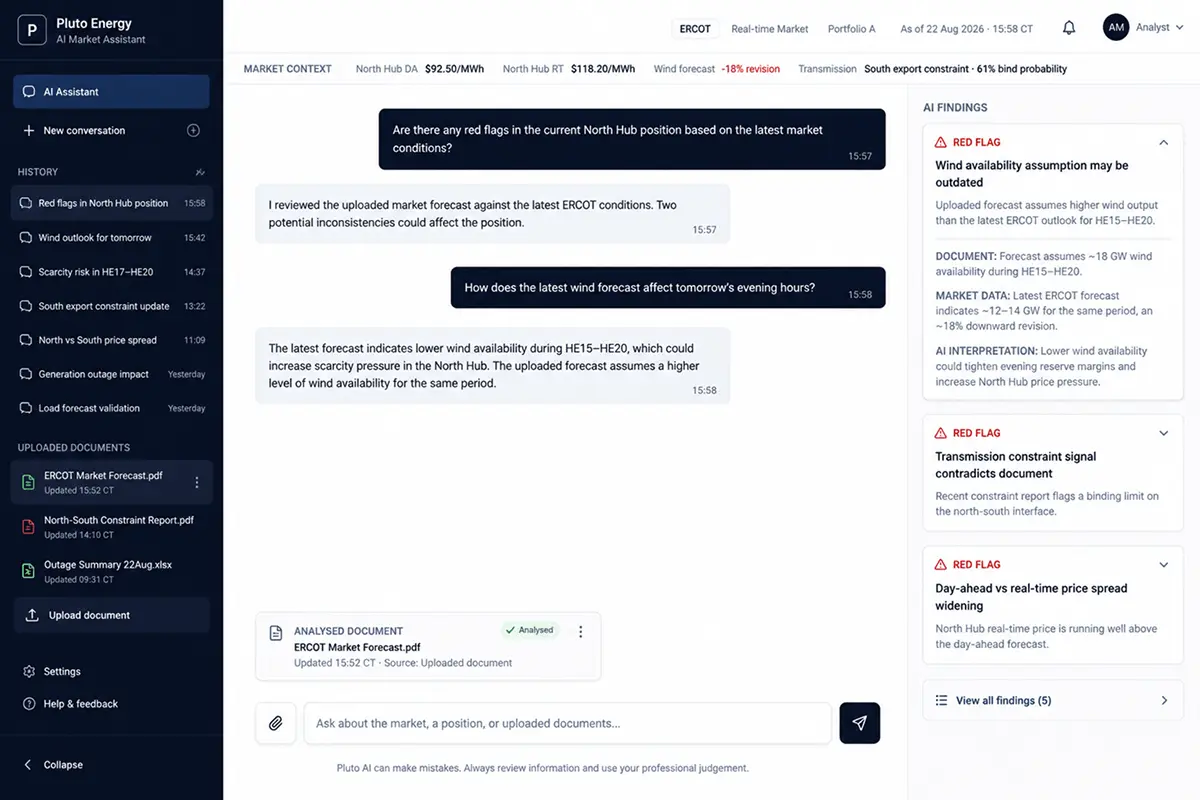
V1 · The chat model
V1 assumed the analyst knew exactly what to ask. The interface was simple. The analytical process wasn't. A conversational AI could answer questions, but the analyst still had to build the context, frame the question, and interpret the answer themselves.
The mental model gap: the product treated each query as independent. The analyst's reasoning is sequential and contextual.
An answer engine maps only to the final stage of the analyst's process. Every prior stage (finding the signal, gathering evidence, testing assumptions) remained outside the product.
V2 · The context model
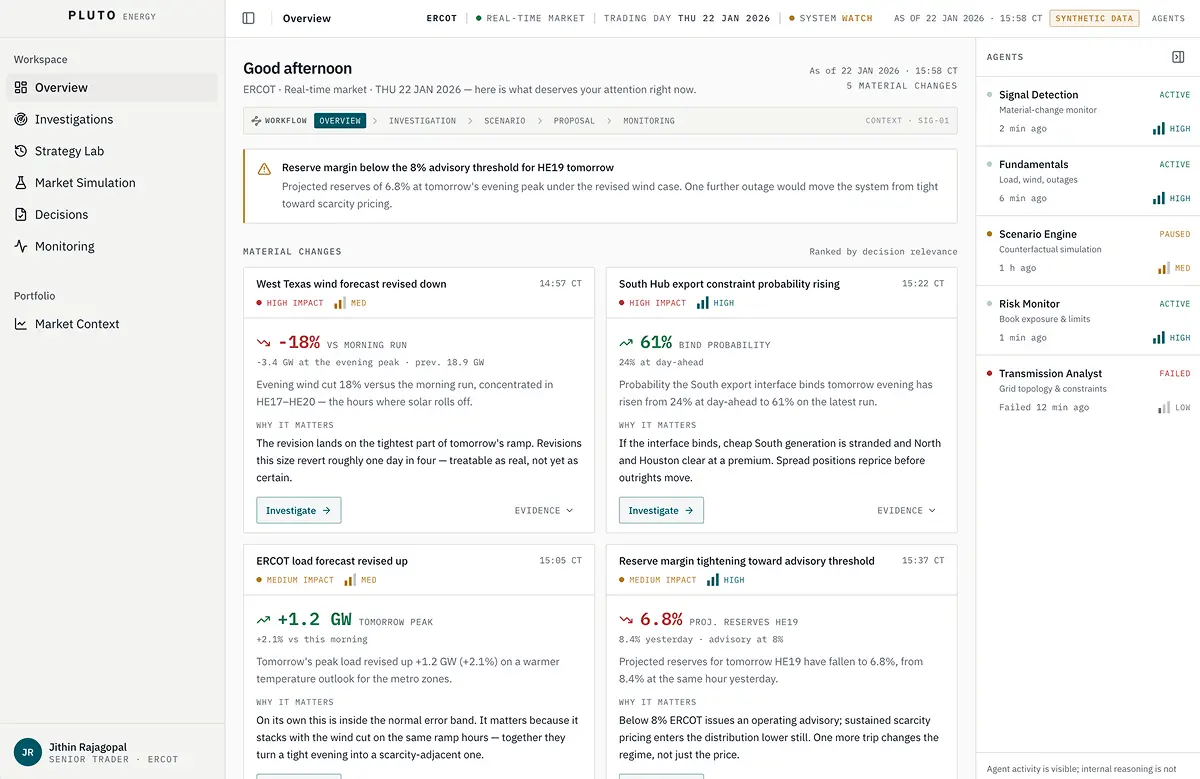
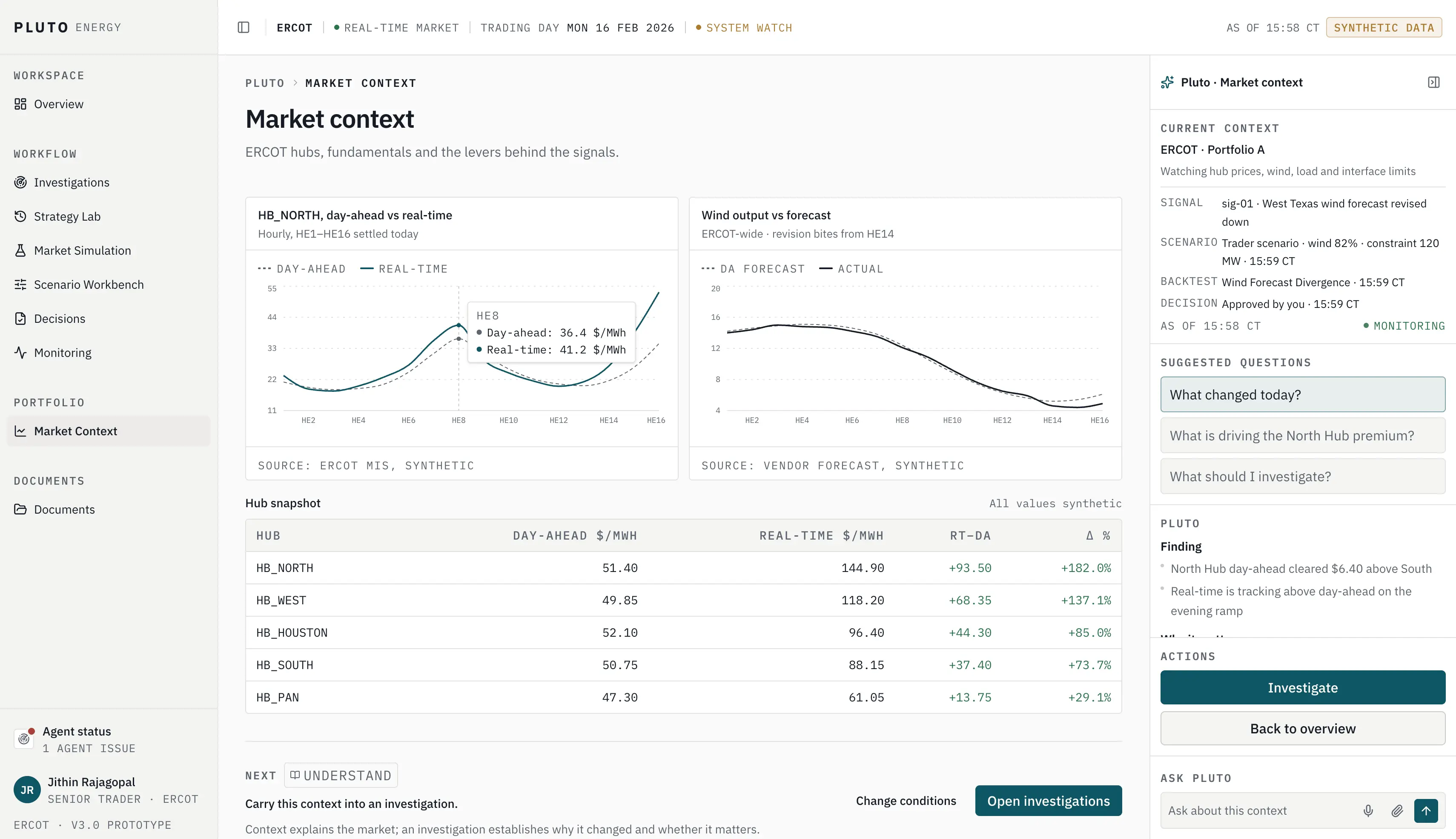
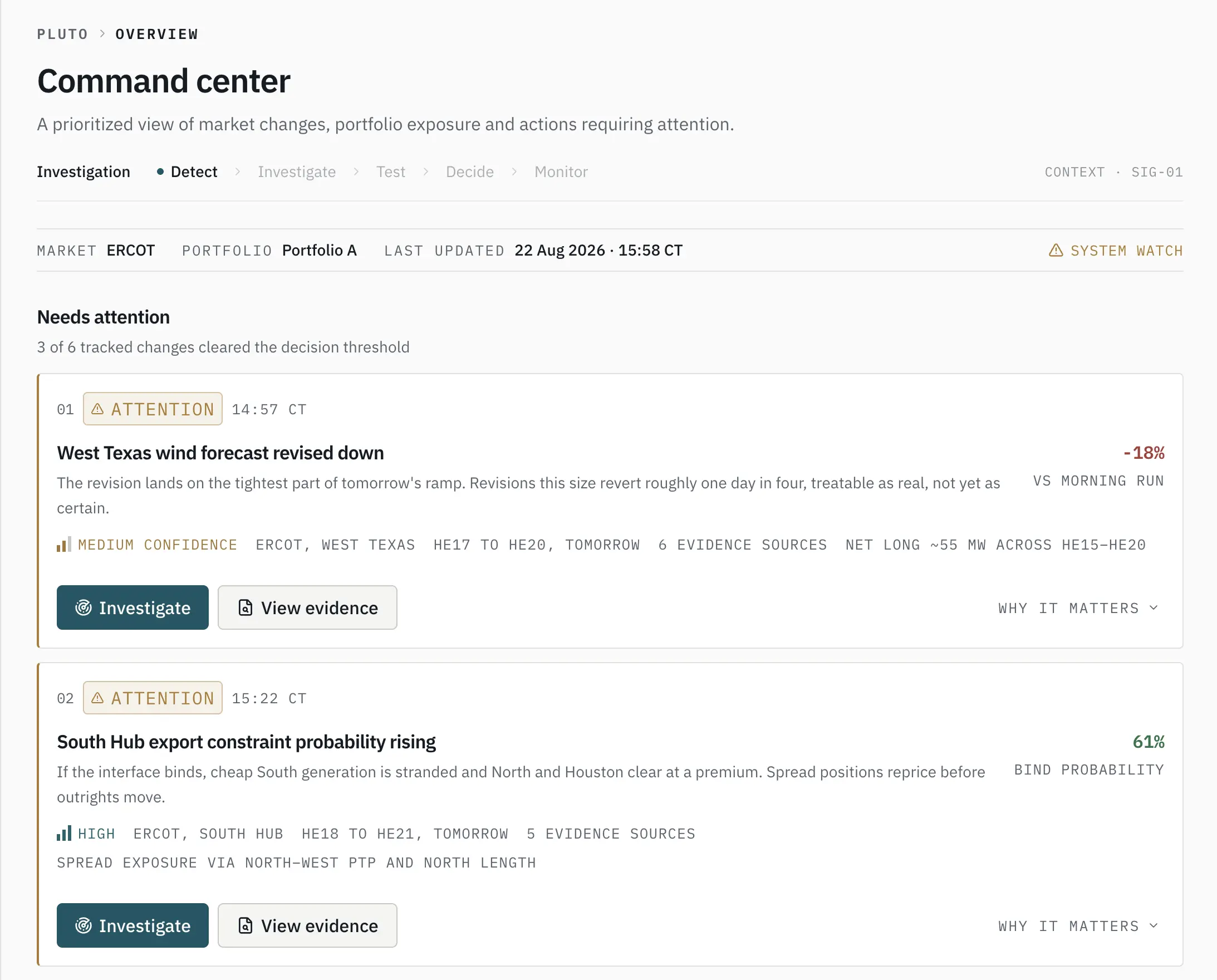
V2 moved the product closer to the analyst's starting point. Instead of waiting for a question, the system now surfaced what mattered: material market changes, supporting context, and agent confidence levels.
V2 made the market easier to read. It did not yet make the analytical journey continuous. Investigation, scenario modelling and decision-making were still separate from the detection layer.
Surfacing the right signal is necessary but not sufficient. The limitation of V2 was not information volume. It was that the workflow broke after investigation ended.
What research changed
The CEO and CTO had conducted early conversations with analysts before I joined the exploration. I subsequently led deeper qualitative design validation with the CTO as a primary domain source. Three observations shaped the V3 direction.
Analysts consistently used AI outputs as directional input, but always applied their own judgement before acting on any conclusion. Existing models were useful but not trustworthy enough to bypass investigation.
The AI should support the reasoning process rather than make the decision opaque. Removing judgement from the workflow was the wrong goal.
Understanding why a price moved was more actionable than knowing that it moved. Context and drivers were as important as the signal itself.
The product needed to surface evidence alongside conclusions, not in a separate tool the analyst had to switch to.
The analytical workflow naturally spanned detection, investigation, scenario modelling and decision, but each phase used different tooling that didn't connect. The cognitive cost of switching between tools was significant.
The interaction model needed to match the analyst's natural reasoning flow, not flatten it into a single query or fragment it across separate tools.
| Analyst's reasoning | V1 | V2 | V3 |
|---|---|---|---|
| Event A market change occurs | Chat | Detect | Detect |
| Evidence What does it mean and why? | Chat | Context | Investigate |
| Drivers What is causing the change? | Chat | Analysis | Analyse |
| Assumptions Does the price model still hold? | – | Analysis | Challenge |
| Scenario What is the price impact? | – | Analysis | Recalculate |
| Decision What should I do? | Answer | Answer | Decide |
| Alignment | Low | Partial | High |
03 · The V3 product model
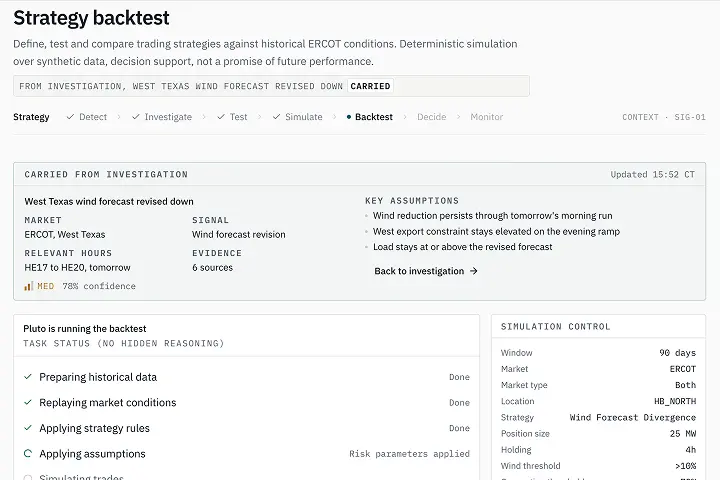
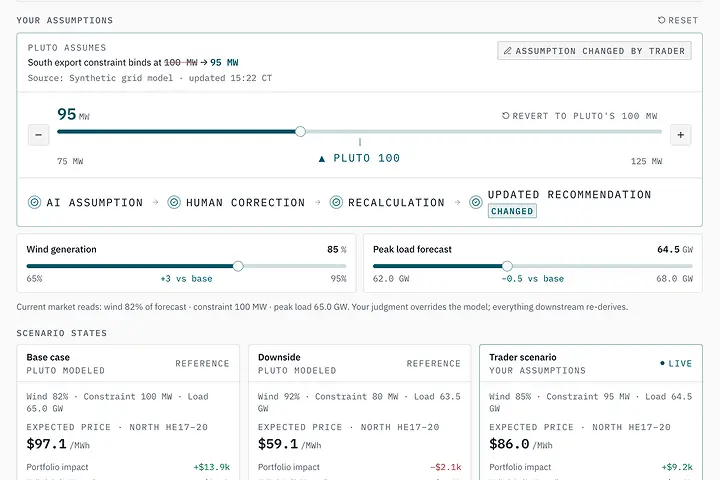
V3 connects the analytical stages into one continuous workflow. The AI automates analytical preparation. The analyst retains judgement.
The system surfaces material market changes, ranked by relevance.
Rank by materiality, not chronology. The analyst should see what matters, not search for it.
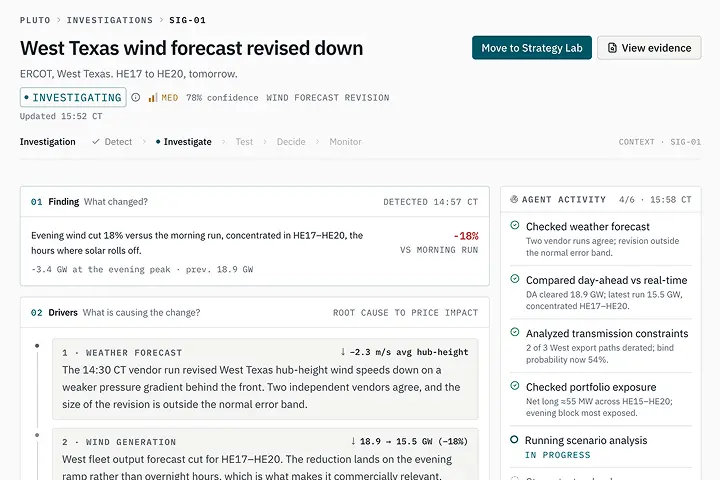
The analyst opens the event. Supporting context (supply-demand signals, related movements) is pre-loaded.
Supporting evidence belongs with the signal. Requiring the analyst to open a separate tool breaks the reasoning chain.
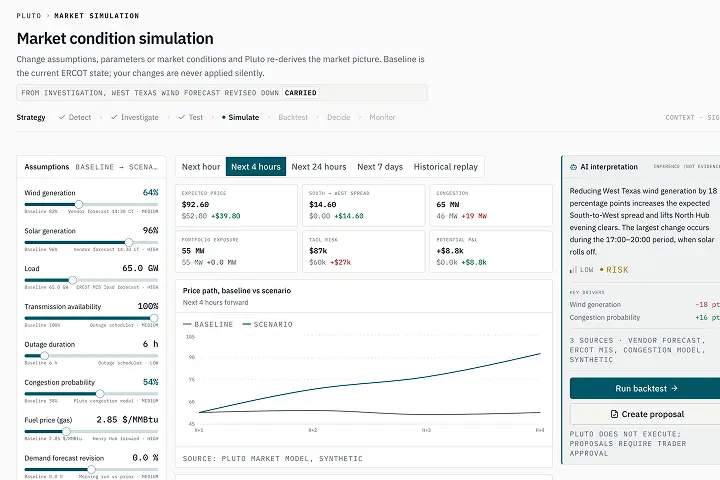
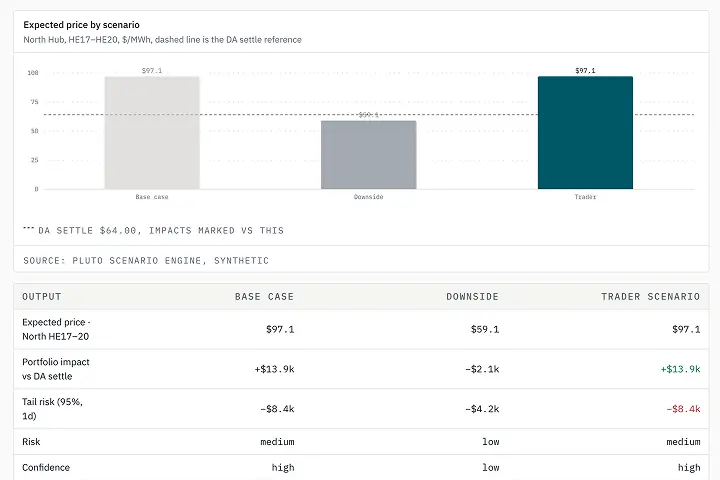
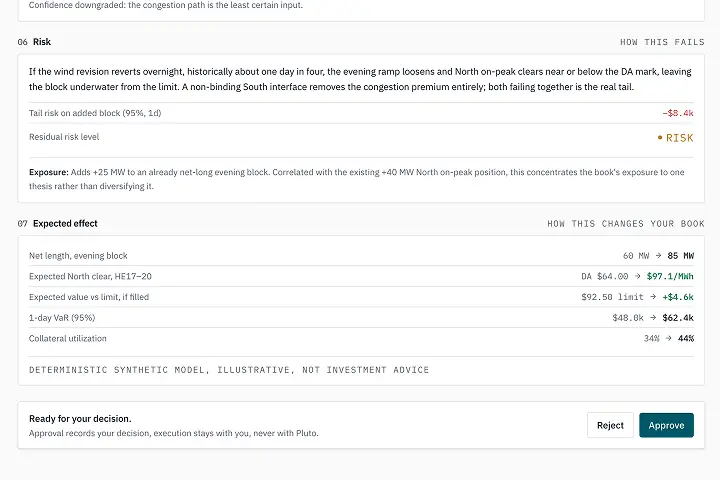
AI generates a price-impact scenario from the current assumption set.
Show the result alongside the logic. Analysts don't trust conclusions they can't trace.
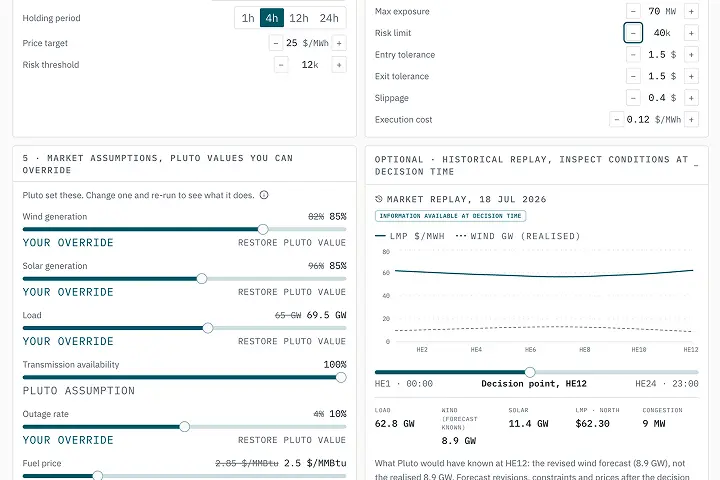
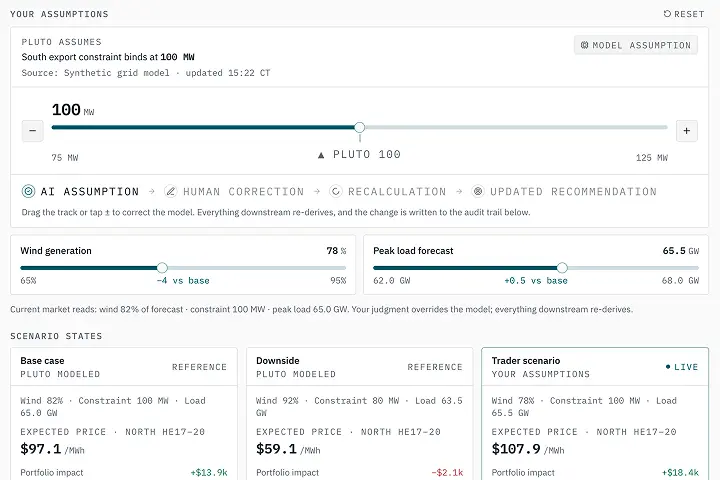
The analyst can inspect and edit the underlying assumptions before accepting the scenario.
Make disagreement actionable, not passive. If an assumption is wrong, give the analyst somewhere to correct it.
The system recalculates with the revised assumption set and shows the new result alongside the original.
Make the consequence of the override visible. The analyst needs to see what changed, and by how much.
The analyst makes the final trading decision with the full reasoning chain preserved.
The decision belongs to the analyst. The AI structures the evidence. It does not own the conclusion.
Not every market event is clear-cut. When an assumption feels wrong, the analyst can inspect the evidence and override before the system recalculates. The intervention is visible, so the analyst can see what changed and whether the updated scenario makes sense.
Override is not an edge case. It is the moment where human judgement matters most. The override flow should feel as direct as any other action in the product.
04 · Reflection · trade-offs · future
AI answered questions. The analyst built their own context.
AI surfaced and contextualised what mattered. The analytical journey was still fragmented.
AI participates across the analytical workflow while the analyst retains control at every stage.
Less searching
Information overload
Better understanding
More cognitive load
Human control
More interaction complexity
Better continuity
Less flexibility
The natural progression is from black box to connected system to increasingly transparent reasoning. V3 surfaces the conclusion and the assumption. The unresolved question is how much of the AI's evidence, uncertainty and confidence an analyst should be able to inspect, without recreating the cognitive overload that earlier iterations introduced.
This is not a generic AI transparency problem. It is specific to how this product thinks about market events, and whether the analyst can tell when the product's reasoning diverges from their own.