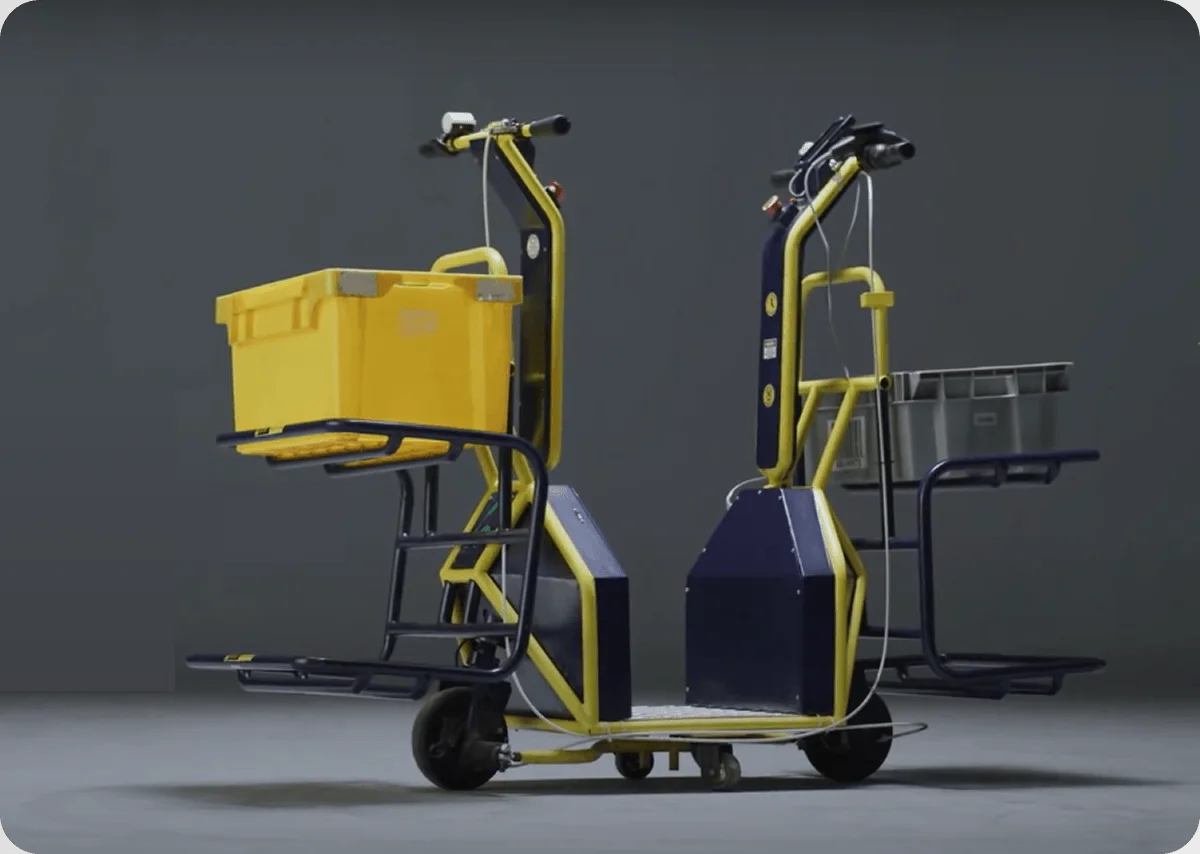
15km Per Shift on Foot
Associates walked behind manual trolleys — the physical cost of no routing intelligence. Every hour of fatigue was direct throughput loss, invisible in the P&L until it compounded.
Building a Low-Capital Expenditure (CapEx) IoT Mobility System for High-Throughput Warehouse Operations.
From the first field observation to the 100th deployed unit, I held end-to-end ownership: product concept, physical architecture, manufacturing process, QC governance, procurement authority, and cross-functional engineering leadership across 9+ engineers. The 38% efficiency gain and my formal recognition as a co-inventor on the utility patent application both stemmed from decisions made within this scope.
I drove the product vision and physical system architecture across V1 and V2 — 100% of the mechanical design, chassis architecture, and physical interface. I set every spatial constraint and signed off on every dimensional compromise before it entered the build.
I designed custom assembly fixtures and QC inspection gates that enforced tolerance mandates regardless of vendor precision. I personally led the assembly, testing, and commissioning of every unit that shipped — if it failed in the field, I had approved it first.
I held complete authority over component specifications, Bill of Materials (BOM) governance, and Engineering Change Requests (ECRs). No part entered the assembly line without my dimensional and commercial sign-off. I used this authority to protect per-unit margins at every procurement cycle.
I tightly coordinated with Harness, Firmware, and Electrical leads — embedding myself in their workstreams to ensure every parallel track integrated into the final vehicle without rework. I directly mentored six engineers, translating mechanical constraints into buildable briefs they could execute without ambiguity.
I drove the product vision and physical system architecture across V1 and V2 — 100% of the mechanical design, chassis architecture, and physical interface. I set every spatial constraint and signed off on every dimensional compromise before it entered the build.
I designed custom assembly fixtures and QC inspection gates that enforced tolerance mandates regardless of vendor precision. I personally led the assembly, testing, and commissioning of every unit that shipped.
I held complete authority over component specifications, BOM governance, and Engineering Change Requests (ECRs). No part entered the assembly line without my dimensional and commercial sign-off.
I tightly coordinated with Harness, Firmware, and Electrical leads — embedding myself in their workstreams to ensure every parallel track integrated into the final vehicle without rework. I directly mentored six engineers, translating mechanical constraints into buildable briefs they could execute without ambiguity.
Follow a shift through a scaling warehouse. Volume enters healthy — then bleeds at three joints. No single failure is fatal. At scale, the combination is.
Associates walked behind manual trolleys — the physical cost of no routing intelligence. Every hour of fatigue was direct throughput loss, invisible in the P&L until it compounded.
Global robotic systems demanded floor modification, specialist maintenance, and capital no domestic 3PL could justify. The technology existed — the entry conditions for deploying it did not.
Pick error rates, throughput latency, and reverse-logistics cost eroded margin every shift — with no instrument to detect or quantify them. The problem stayed invisible until the month-end numbers arrived.
Build and scale an IoT-enabled mobility fleet for enterprise warehouse operations. The constraint was non-negotiable: deliver a measurable efficiency improvement while keeping the capital expenditure (CapEx) profile low enough for domestic 3PL adoption. We solved both simultaneously.
Not gradual drifts — forced choices, each with a clear rationale, made before the build began.
Specialist vendors priced the unit out of every domestic market. Tubular steel and sheet-metal construction unlocked local fabrication at scale and protected per-unit margin from the first production run.
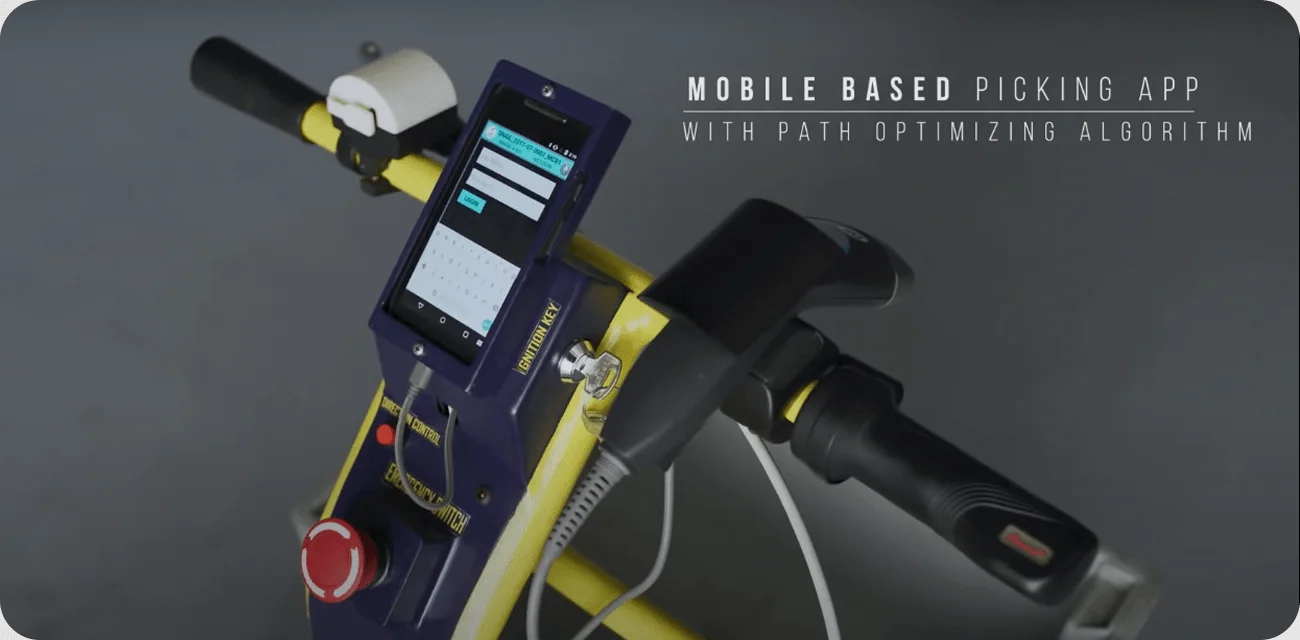
Sized for the 95th-percentile operator with the WMS scanner mounted on the steering column — onboarding collapsed to under one hour across entire facility teams.
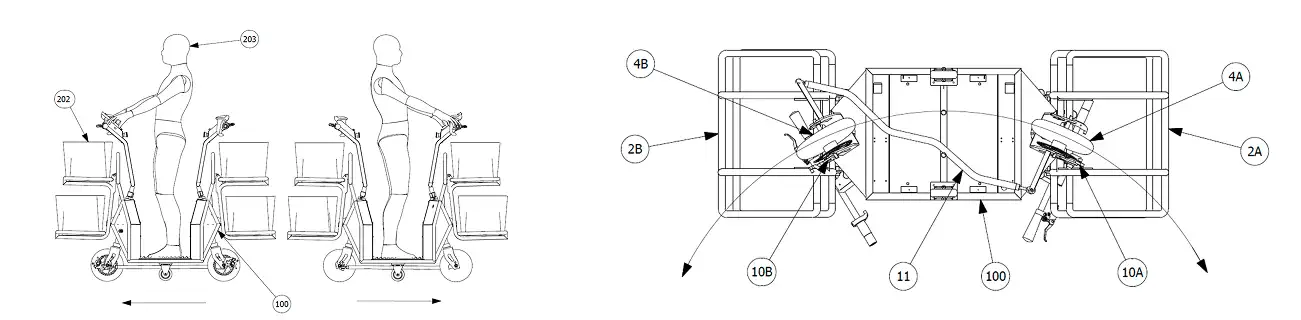
The ant-colony route algorithm needed a body that could act on it. A bi-directional chassis with sub-900mm aisle clearance made the software intelligence physically executable.
Onboard LED diagnostic sequences and a defined harness architecture turned each vehicle self-reporting — ~95% of non-mechanical faults resolved remotely, eliminating dispatch cost.
By constraining mechanical variables to locally manufacturable materials and treating the vehicle as a data node from day one, I decoupled the product from the rigid facility requirements that locked out global alternatives. When the Amazon pilot stalled in US procurement committees, we had already built the case to take the verified efficiency data directly to the domestic 3PL market — and scaled to 100+ units without waiting for a single enterprise signature.
I designed a bi-directional chassis that could physically execute ant-colony route algorithms inside 900mm warehouse aisles — the hardware was built around the algorithm's spatial requirements, not the other way around.
I eliminated the cognitive gap between digital picking lists and physical navigation by mounting the WMS scanner column directly onto the steering column — one entity, one operator action, zero context switching.
I protected the production line from local vendor inconsistency by designing custom jigs and inserting hard inspection gates at vendor facilities — tolerances were enforced by physical geometry, not operator discipline.
I turned raw mechanical hardware into a networked diagnostic node by defining the harness architecture and LED fault protocol — enabling remote triage that eliminated the need for physical technician dispatch on ~95% of non-mechanical faults.
When Amazon's global procurement process stalled in US committee layers, I took the verified pilot data and drove a direct pivot to the domestic 3PL market — targeting the sector that global competitors had priced out and ignored.
I designed a bi-directional chassis that could physically execute ant-colony route algorithms inside 900mm warehouse aisles — the hardware was built around the algorithm's spatial requirements, not the other way around.
I eliminated the cognitive gap between digital picking lists and physical navigation by mounting the WMS scanner column directly onto the steering column — one entity, one operator action, zero context switching.
I protected the production line from local vendor inconsistency by designing custom jigs and inserting hard inspection gates at vendor facilities — tolerances were enforced by physical geometry, not operator discipline.
I turned raw mechanical hardware into a networked diagnostic node by defining the harness architecture and LED fault protocol — enabling remote triage that eliminated the need for physical technician dispatch on ~95% of non-mechanical faults.
When Amazon's global procurement process stalled in US committee layers, I took the verified pilot data and drove a direct pivot to the domestic 3PL market — targeting the sector that global competitors had priced out and ignored.
Lessons from the hardware trenches: my critical insights on telemetry, commercial validation, and system constraints.
We proved 38% efficiency in a live Amazon pilot. That number alone wasn't enough to close the deal — because we had no continuous performance data to anchor the conversation. Throughput variance, fault frequency, picking accuracy over time: none of it was instrumented. The enterprise buyer needed ongoing evidence, not a single snapshot.
We tied the company's near-term survival to a single enterprise buyer. When Amazon's procurement stalled, months of runway evaporated with no revenue event to cushion it. The product was proven. The commercial structure was fragile. One committee delay was enough to force a full market pivot.
Early production failures traced back to vendor precision inconsistency. The instinct was to find better vendors. The actual fix was designing jigs that made vendor skill level irrelevant — if the part didn't fit the fixture geometry, it failed inspection before it entered the line. Designing around your actual suppliers, not ideal ones, is what scales.
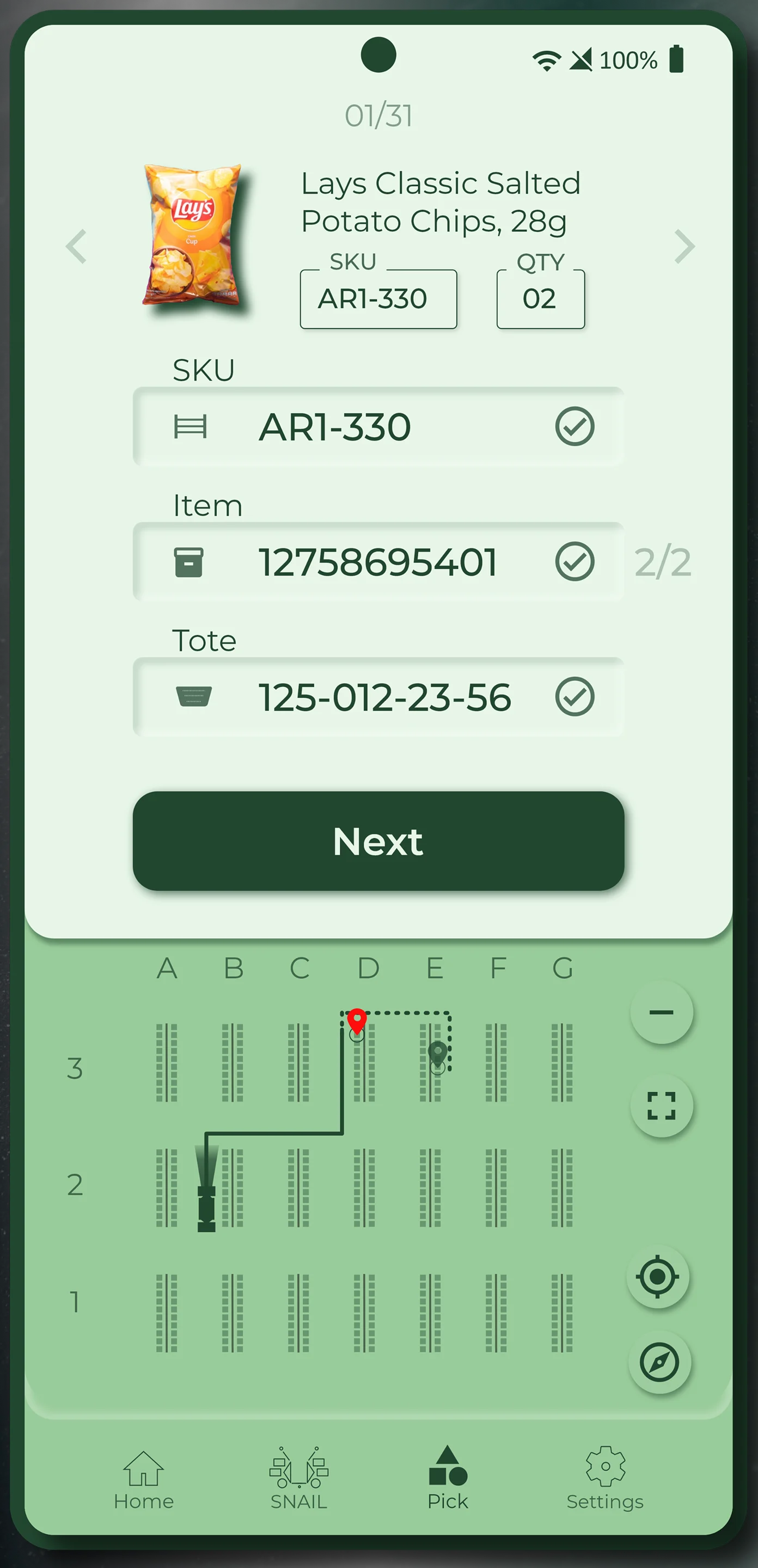
A conceptual look at a mobile operator interface mock-up created post-tenure at Greendzine. This independent design exploration focuses on spatial orientation and industrial UI/UX feedback loops.
This post-tenure concept explores a theoretical operator interface hierarchy — spatial orientation, real-time pick confirmations, and prioritised diagnostic alerts. An independent UI/UX exploration that extrapolates the operational constraints I defined at Greendzine into a screen-based Human-Machine Interface (HMI) paradigm.
WHAT'S NEXT
From a zero-to-one brief to scaled enterprise deployment. The architectural trade-offs and product strategy behind this execution are best explored in a live conversation.